Saturday, 8 January 2011

Undercity: New York

[Video - Undercity by Andrew Wonder on Vimeo]

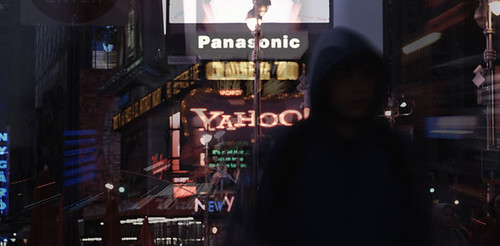
In his most recent project filmmaker Andrew Wonder explores the infrastructure of New York City with 'guerrilla' urban historian Steve Duncan of Undercity.org. Shot entirely with a DSLR while sneaking through the subways, sewers and across the bridges of the city, this film offers a highly compelling glimpse of the motivation behind this kind of Urban Exploration. As Duncan explains on his website:
I try to peel back the layers of a city to see what's underneath. From the tops of bridges to the depths of sewer tunnels, these explorations of the urban environment help me puzzle together the interconnected, multi-dimensional history and complexity of the great metropolises of the world.
While the film does not fail to romanticise UrbEx, what lover doesn't, it does succeed in striking an honest balance in depicting the fantastic excitement and many risks involved. 

For those interested in reading more about more of their adventures beneath New York with Norwegian explorer Erling Kagge I recommend the recent article The Wilderness Below Your Feet by Alan Feuer for the New York Times.

Monday, 27 December 2010

Democracy of Filmmakers - Vimeo Video School

Anyone who's checked out Urban Orienteer before should know what a fan I am of Vimeo. Aside from the quality of both the site and its content, what really stands out for me is the supportive community it has fostered and the creative encouragement it provides for amateur filmmakers. In keeping with this ethos the site has just launched its own Vimeo Video School. Aside from helping users achieve great results, perhaps relatively modest gestures such as this really do help achieve the 'democratisation' of filmaking implied by one enthusiastic user's comment.

In addition to categorising over a thousand user created tutorials as part of the initiative, Vimeo have also provided updates to their Video 101 tutorials for beginners and, of particular interest to myself, a new series called DSLR Basics specifically for photographers using their Digital SLR cameras to capture video. The series is presented by Vimeo's Andrea Allen and filmmaker Philip Bloom who is best known in the Vimeo community for his stunning timelapse photography:

[Video - Sky by Philip Bloom on Vimeo]

The film above was shot over the course of five days and nights in Dubai. Considering the time and patience that goes in to something like this it is fair to say he has learnt a trick or two over the years.

A selection of the videos I found most useful are embedded below along with links to the others. Each of the films in the DSLR Basics series is around 4-5 minutes long, and accompanied by a set of notes for context on the corresponding page.

1. Introduction to DSLR Cameras - Deciding which camera to buy.

2. Setting up your DSLR - Preparing the camera to shoot:


3. DSLR Lenses - Choosing a lens.

4. DSLR Accessories - Choosing accessories to help you shoot with your DSLR.

5. Shooting video with a DSLR - Camera settings and shooting techniques:


6. Recording sound for DSLRs - Ways of recording sound with external devices.

7. Timelapse with a DSLR - Using your DSLR to condense time:


8. Night time Shooting with a DSLR - Shooting footage in low light:


With all this I suppose my New Year's resolution should be to go out more, practice more, and make better films. See you out there!

Tuesday, 7 December 2010

London Education Cuts Protest - 24th November 2010


On the 24th November 2010 Urban Orienteer joined the student March from ULU to Whitehall to protest the proposed government spending cuts on education.

A bit late but I thought it might be worth showing a different side of the days events.

The best part for me was when the dash at Aldwych. The police ruined it for themselves by blocking the route along the Strand, so everyone diverted round King's to the river...much to the confusion of both the police and oncoming traffic. All good fun. My highlight of the day! 

After the police got everyone back on track they made their way via Trafalgar Square to the road block at Whitehall. I Slipped out of the kettle just before the clampdown. Note the kettle was in place well before anyone started using that knackered Police van as a climbing frame.

As the fun was over I did the off. Didn't have any sugar cubes for the horses.

Monday, 29 November 2010

Monday, 22 November 2010

Article 12: Waking up in a Surveillance Society


Back in April I posted the trailer for David Bond's film Erasing David in which he put the surveillance state to the test by attempting to disappear. Now Juan Manuel Biaiñ and Junco Films have released their own documentary entitled Article 12: Waking up in a Surveillance Society. Recently screened at the 24th Leeds International Film Festival this new film uses the twelfth article of the United Nations' Universal Declaration of Human Rights of 1948 as a benchmark to chart the global ascendancy of surveillance society. According to the film synopsis:
Article 12 presents an urgent and incisive deconstruction of the current state of privacy, the rights and desires of individuals and governments, and the increasing use of surveillance.
The film adopts the twelfth article of the Universal Declaration of Human Rights to chart privacy issues worldwide, arguing that without this right no other human right can truly be exercised. It assembles leading academics and cultural analysts including Noam Chomsky, AC Grayling and Amy Goodman to highlight the devastating potency of surveillance, the dangers of complicity, and the growing movement fighting for this crucial right.
Article 12 provides a powerful wake-up call as we sleepwalk into a worldwide surveillance society.
Article 12: Waking Up in a Surveillance Society

Despite our coalition government's pledges to 'implement a full programme of measures to reverse the substantial erosion of civil liberties and roll back state intrusion' following the general election in May, and the suspension of s44 for the purposes of stop and search of individuals without the criterion of 'reasonable suspicion' back in July, recent proposals to revive the previous government's Intercept Modernisation Programme inspire little confidence in their resolve. 

Indeed, in his recent report to the House of Commons the UK Information Commissioner, Christopher Graham' called for 'government departments to build post-legislative scrutiny into their work as a key way of ensuring the successful delivery of the new transparency and privacy agenda'. This followed the recommendations of the Surveillance Studies Network's (SSN) recent update to their 2006 'Report on the Surveillance Society'. 

In this climate Biaiñ's film looks as though it may prove to be essential viewing. Keep your eyes peeled for further screenings, or simply follow the film on Facebook.

Monday, 15 November 2010

Utopia London?


In this new documentary Tom Cordell attempts to tell the story of the London he grew up in and the Architects who built it. As he explains:
I grew up in the London of the 80s and 90s and it's still my home. I've always been drawn to the excitement of its post-war landscape; concrete and brick textures, unadorned clean lines, neon glow and dark shadows. And most Londoners my age that I know feel the same - the modernist city is our landscape. Yet all our lives we have been told that the same urban spaces are ugly – symbols of a failed, arrogant technocracy. While we're comfortable celebrating 60s pop culture, many people still hate the buildings of that time.
Worryingly, while I had once thought that popular taste would catch up with the urban building of the 50s, 60s and 70s, it's now under attack. Major symbols of that time are being destroyed - often with gruesome delight on the part of the wreckers. We urgently need to defend what is left before it is all gone.
So this film is an attempt to understand both why I am so drawn to these cityscapes and also why some hate them so much.
What excites me about Cordell's project is the way the tensions he describes resonate with my own interests in the subject of urbanism, and my personal ambivalence toward the city to which I remain attached. Undoubtedly Cordell's attachments are different from my own. Growing up in the fringe of London's northern commuter belt I have always felt like an outsider or stranger in London. As Georg Simmel would have had it in his influential essay 'The Stranger': I am 'the man who comes today and stays tomorrow - the potential wanderer, so to speak, who although he has gone no further, has not quite got over the freedom of coming and going'. If we accept this supposition of a propensity toward wanderlust, the real riddle of the stranger then would be to find out what makes him stay? While I am yet to visit many of the the sites appearing in Cordell's film, I wonder if the draw they have for him bares any similarity to that which I've felt toward the Barbican Estate ever since I stumbled upon it on a walk through the City a couple of years ago. 

Situated near the heart of London's central business district, the Barbican appears as an anachronism on the City's changing skyline. Perhaps there is something quixotic in the image of this outmoded Brutalist fortress of concrete, squaring off against the City's new champions of commerce rising to the east; palaces of commerce armoured in glass and steel, more ethereal in appearance, or more wraith-like depending on your view.

At the same time the Barbican is an island of urban life in a sea of commuters. I've often imagined it declaring independence from the rest of the city, or else turning feral in the vein of Ballard's book High-Rise. In my imagination it is more a ship waiting to set sail than an island. Over the last couple of years several of the pedways that reached out from the estate have been severed as the surrounding area has been redeveloped: the gangplanks are going up, all we're waiting for is the hoisting of the mainsail and we're off down the Thames in search of booty off the Docklands main.

While it is extremely unlikely that architects Chamberlin, Powell and Bon or the LCC ever entertained thoughts of the Barbican as a Pirate Utopia, it is interesting to consider the extent to which the buildings they created have preserved or compromised the Utopian Egalitarianism that informed the earlier work of planners and architects such as Patrick Abercrombie and John Foreshaw, embodied in the County of London and Greater London plans of the 1940s:

[Video - The Proud City: A Plan for London (Public Domain Video) hosted by Utopia London on Vimeo]

Despite the harsh modernism, the uncompromising functionalism, or even the brute concrete hostility of many of the sites that were intended to embody these ideals, I'd like to suggest that it is their enduring influence on London's urban imaginary that continues to draw us to them. As Cordell tells us:
I began to contact the people who tried to change the city, and my narrative thread continued to shift around as the filming went on. And what I found was that the power of the buildings came from the vision they were meant to serve - and that it's this vision that so polarises opinion. They symbolise an attempt to build a fair, open society, and their existence frightens people who have rejected these values.
The film will be screened by DoCoMoMo in London on the 14th of December and followed by Q and A with director and architects. The film is also available for purchase on DVD from the Utopia London website.

Tuesday, 5 October 2010

The most wonderful building you'll never explore...


Back in 2009 I began a project with my close friend Mark at Dancing Eye called 'In the Shadows of the Crystal Palace'. At the time I'd just gained an interest in street photography and naively started to take photographs around the City of London. It was only by virtue of the absurdities of s44 anti-terror legislation, and private securities regular attempts to disallow my taking pictures of their transparent buildings, all the time being watched by their cameras, that I became interested in the new glass architecture that suddenly seemed to be springing up across the city. From there on my curiosity took over and quickly led me to the most wonderful building I'll never explore.

In researching the project I visited the Sydenham Hill site several times hoping to capture something...I'm not sure what. While he Crystal Palace Park is wonderful in its own right, I can't help my disappointment that so little remains of the building that gave it its name.

From 1854 to 1936 the site was home to Joseph Paxton's Crystal Palace. Originally intended as a temporary structure to house The Great Exhibition of 1851 in London's Hyde Park, the Palace was relocated to the Sydenham site as a result of popular demand, but no doubt assisted by the commercial interest that inspired. Following its destruction by fire in 1936 the site was used to host events like motor racing until the 70's, but was otherwise left to fall into disrepair.

Today the area is dominated by the Crystal Palace transmitter erected during the 1950's. All that remains of the original site is the upper terrace with its Sphinxes and broken statues, and the restored exhibit of antediluvian reptiles in the lower park. The park's past is commemorated by a pair of arches replicating the prefabricated iron frames Paxton designed to hold his magnificent building's spectacular glass panels.

If my trips yielded little else I at least managed to capture the stunning autumn sunrise seen in my short film above. How much more glorious would it have been though to have snuck into the still standing Palace before dawn; seen the sun rise from within the great Central Trancept; watched the morning light dance across the Alhambra, Egyptian, Greek and Roman courts; and observed the eager morning crowds enter from my hiding place up above.

We may well speculate that if the building did still stand it would be little more than a mall today, but to be fair this criticism seemed to plague the building from the beginning. And so what if it is only by virtue of its absence that it maintains its aura? Doesn't this allow it to serve us as a symbol all the more?

With that in mind I'd like to end with two wonderfully evocative passages from a guide to the Crystal Palace featured in an issue of the The Leisure Hour journal from 1856:
See! like a vision of magic, its striking foreground and magnificent park come into view; whilst, beyond them the Palace rises, wondrous in extent, yet so light and aerial in aspect, as almost to defy belief that it is a thing of solid substance. 

What an enchanting scene here meets the eye! A seemingly interminable vista opens, presenting innumerable gaily-dressed groups of visitors, promenading through lines of luxuriant foliage, intermingled with statuary, from behind which arise ranges of elaborately ornamented facades, and lofty, slender, parti-coloured columns, festooned and enwreathed with graceful climbing plants, springing from the ground, and shooting out from suspended baskets, lustrous with blossoms of every hue; while, high overarching all, is a crystal canopy, stained, as it were, with the mellow blue of the heavens, or sparkling with myriads of sunlight reflections. In the foreground, covered with white and purple and crimson water-lilies, is a sheet of water, from the midst of which springs the world- renowned crystal fountain, glittering with prismatic colours. 
This passage is quoted from the full article that featured in a recent post on Lee Jackson's excellent blog The Cat's Meat Shop. Those with a taste for further Victorian delights are strongly encouraged to try Lee's full online archive The Victorian Dictionary.